Build TADC OCs That Feel Stage-Ready
The strongest digital circus OCs combine silhouette, material logic, and performance identity. When you define whether your character feels plush, plastic, rubber, glass, or stitched fabric, the image model has a clearer target and your outputs stay more recognizable.
Creative Challenges
Use these briefs when you want fresh TADC OC directions without losing your prompt structure.
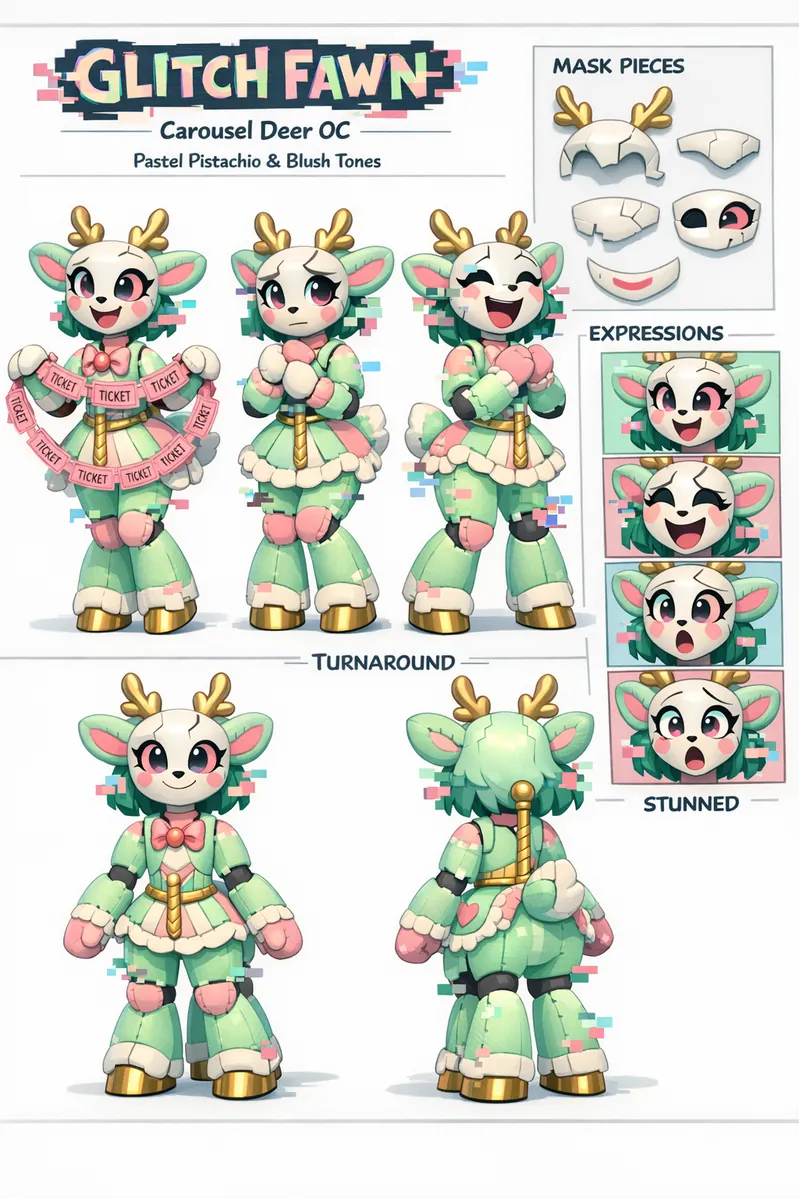
- Design a nervous carousel deer whose porcelain face panels slide apart whenever it lies.
- Create a stage magician rabbit with plush limbs, mirrored shoes, and a hat that leaks ticket confetti.
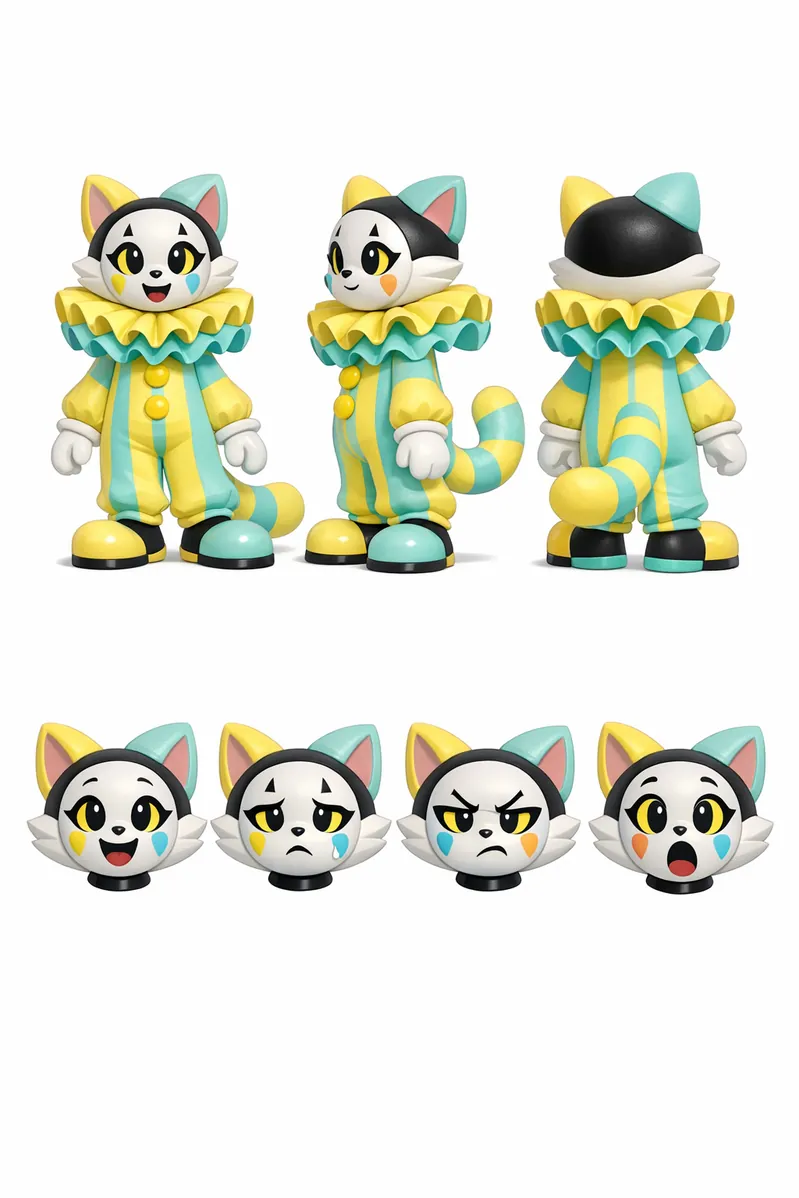
- Imagine a mime clown cat whose bubble collar changes color with each emotion shift.
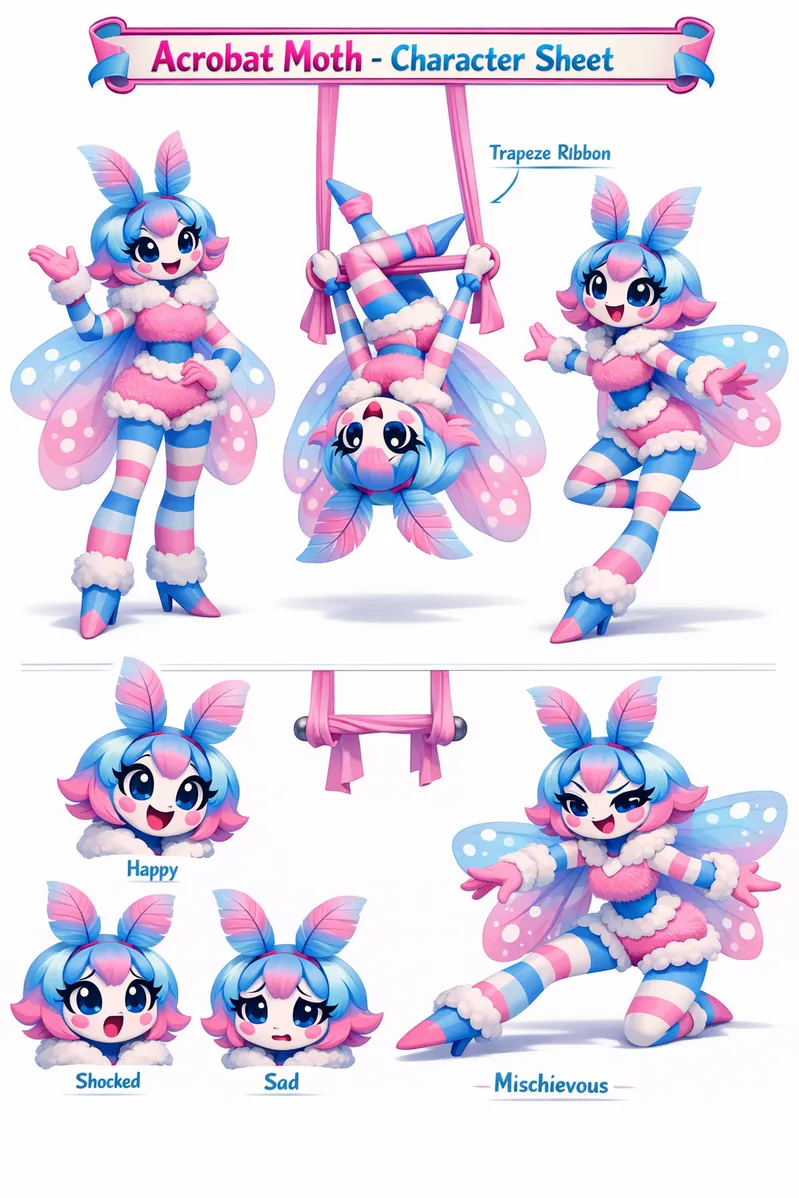
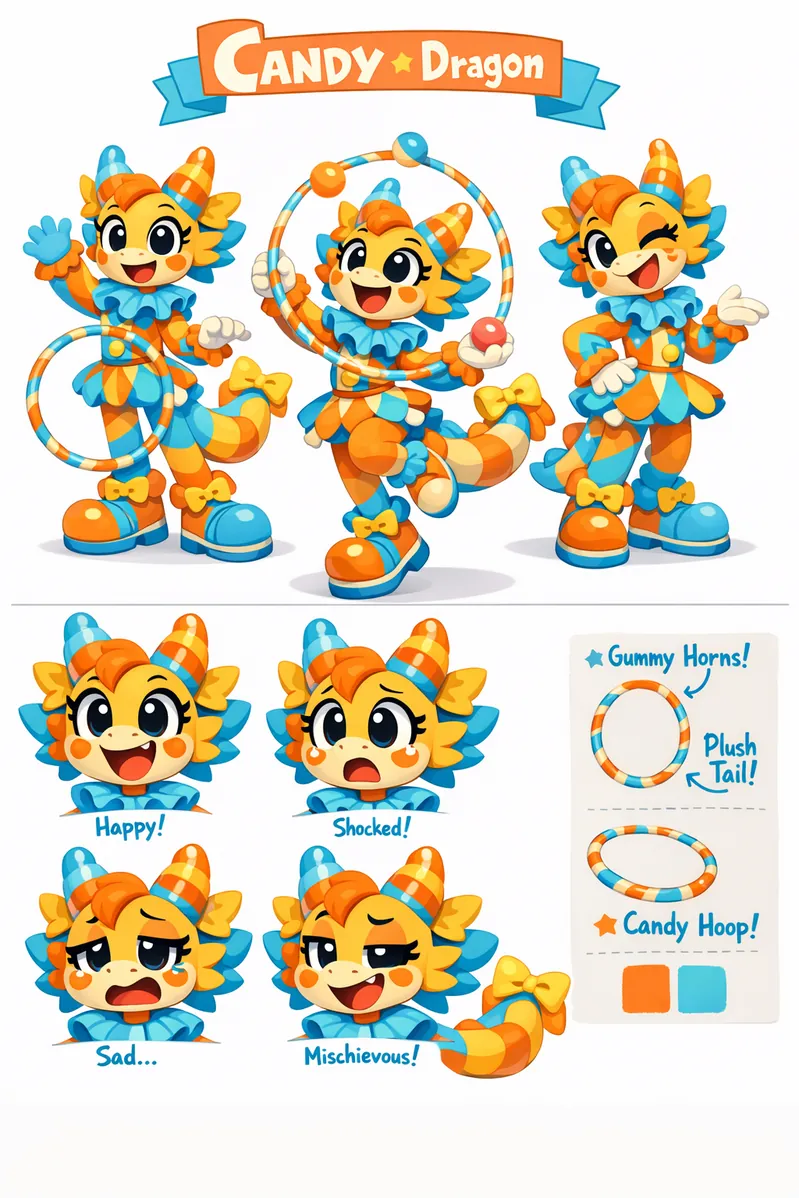
- Build a cotton-candy dragon acrobat with ribbon wings and squeaky toy joints for aerial poses.
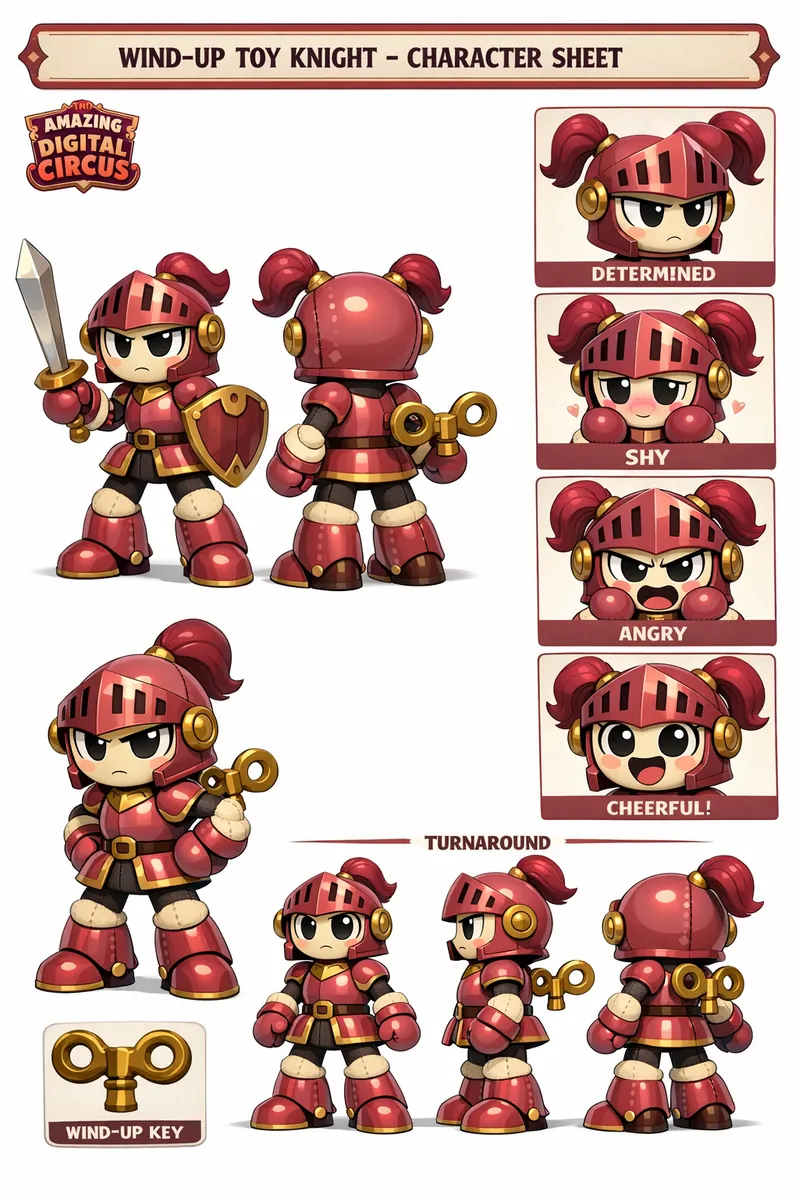
- Draft a stoic toy knight who guards the circus gate with a wind-up key and checkerboard cape.
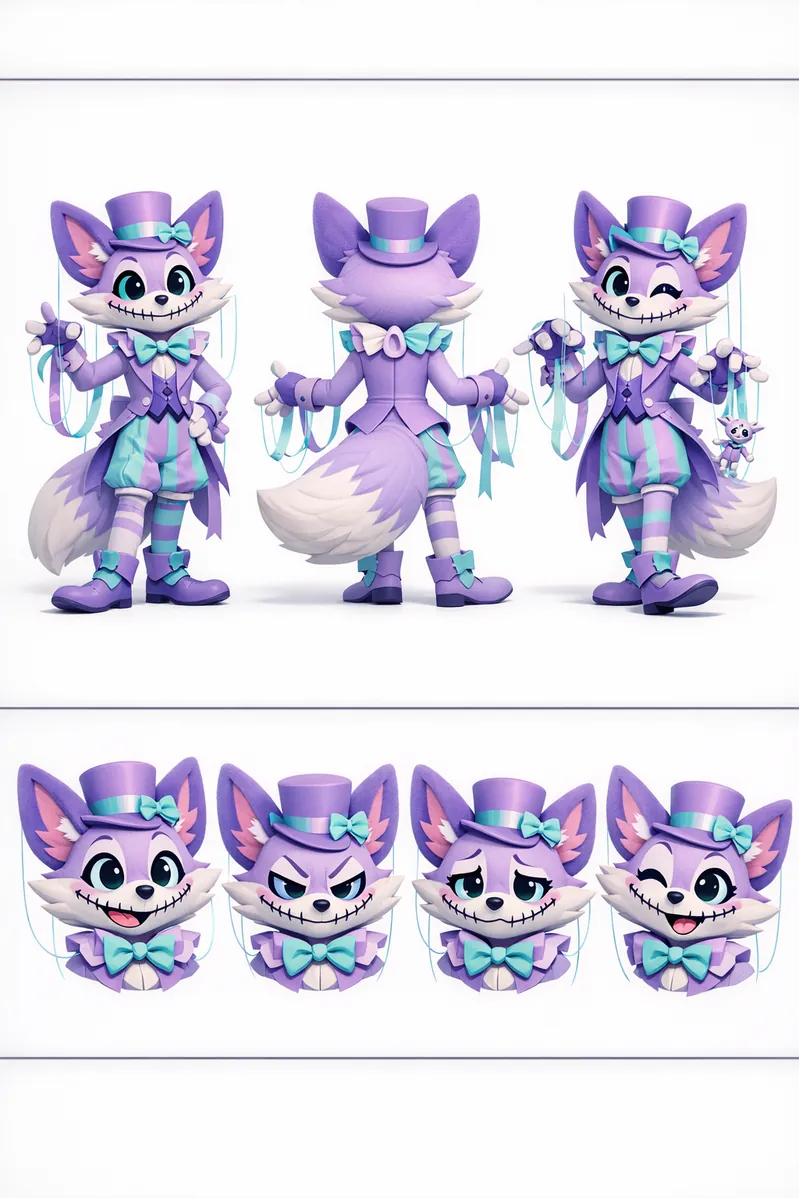
- Create a fortune-teller fox puppeteer who controls glowing marionette strings and pocket-sized stage curtains.
TADC Prompt Tips
Start with a Circus Role: Ringmaster, acrobat, mime, puppeteer, and mascot roles give the model a stronger design direction than generic clown wording.
Pick One Material Family: Choose plush, plastic, porcelain, rubber, or mixed toy surfaces early so the character feels more cohesive.
Keep the Palette Tight: Two main pastels plus one accent color usually produce cleaner carnival styling than a full rainbow prompt.
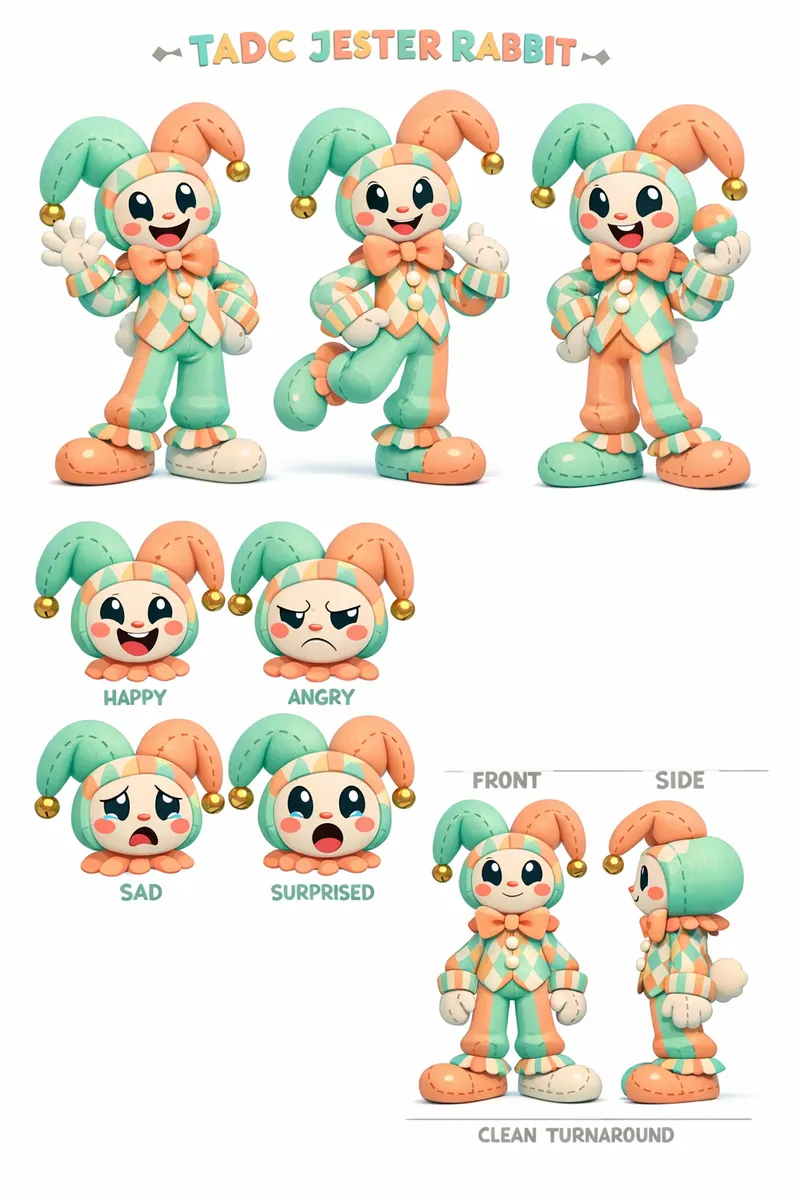
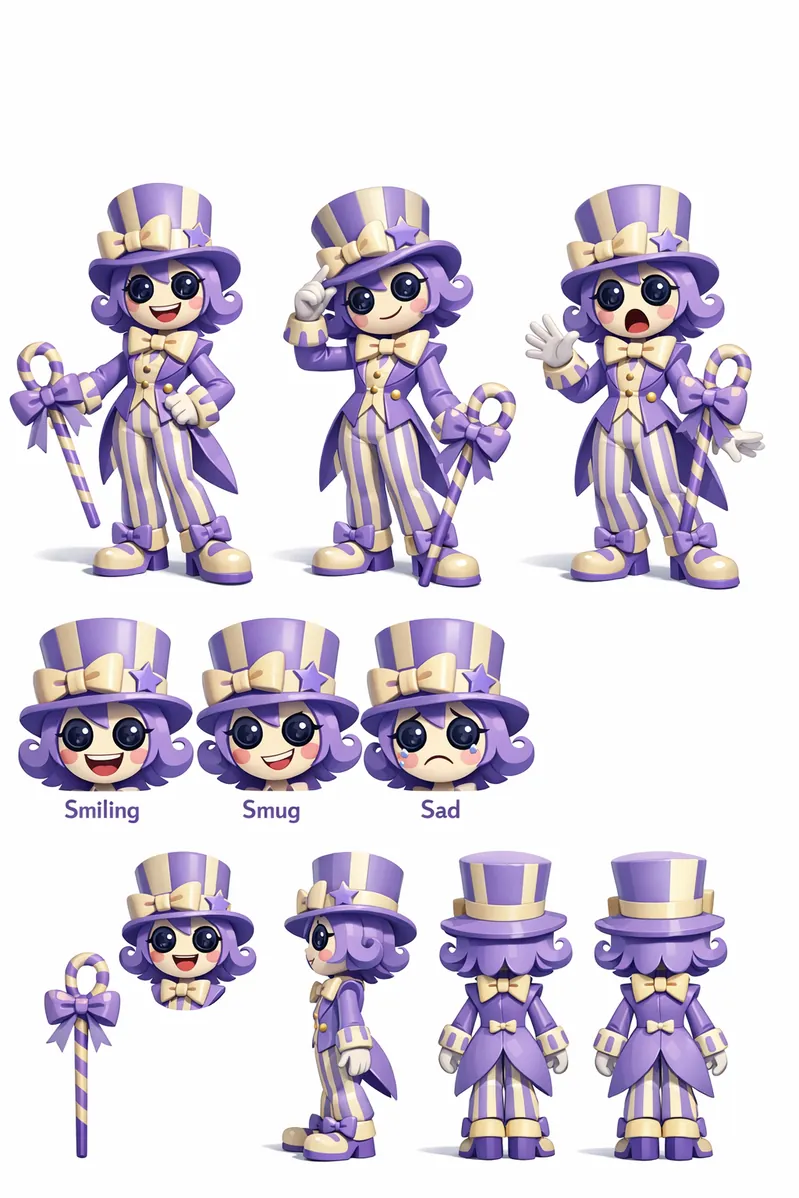
Ask for a Sheet Layout: If you want a design board instead of one hero shot, explicitly request a reference sheet, multiple poses, and turnaround views.
Separate Pose and Expression Cues: Write face directions and body directions as different prompt blocks so the model can preserve both clearly.
Why Use TADC OC Maker
- Reference-Sheet Friendly: The workflow is built for pose sets, expression panels, and turnaround-style character boards.
- Stronger Material Identity: Prompt structure helps plush, plastic, porcelain, and rubber details stay visible instead of blending together.
- Faster Variant Building: Once your base character works, you can branch into alternate moods, props, and costumes without rewriting everything.
- Better Story and Role-Play Assets: Clean sheets are easier to reuse in fan fiction, OC bios, comic planning, animation pitches, and social posts.
Turn One Circus Concept into a Full Sheet
Save your best base prompt, then branch it into expression pages, prop studies, alternate costumes, and story-scene variations. This keeps the same character DNA while expanding your fan project or role-play world.